
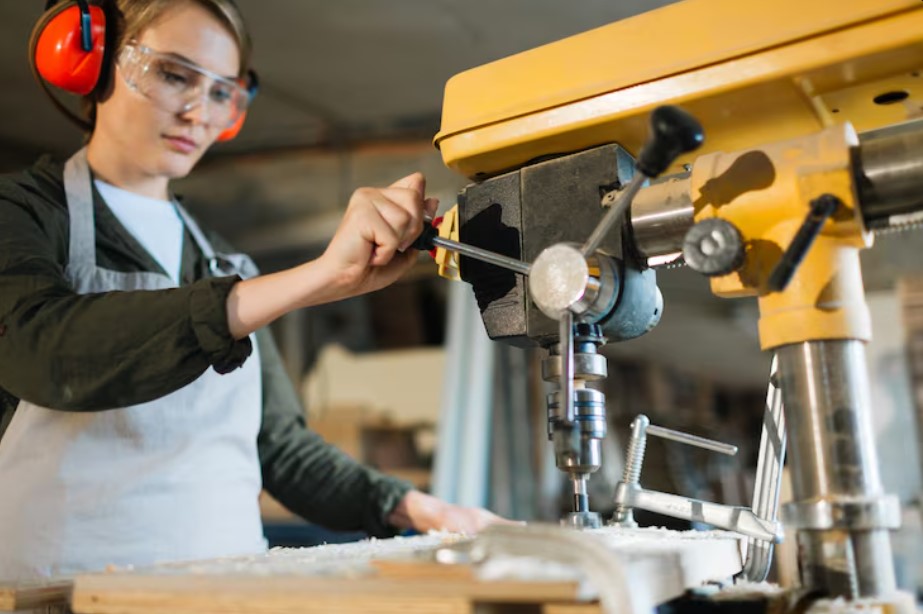
A gear may be small enough to hold in your hand, but the engineering behind its teeth can be remarkably complex.
Tooth profile, spacing, alignment, surface finish, material, and dimensional accuracy all contribute to how a gear performs once it enters a machine. When gears are produced in demanding applications, even a small inconsistency can affect noise, vibration, efficiency, wear, and service life.
That is why gear tooling deserves as much attention as the machine itself.
From hobbing and milling to specialized production operations, the quality of the cutting tool has a direct relationship with the quality of the finished gear. For manufacturers evaluating gear cutting tools manufacturers India or sourcing specialized gear hob manufacturers, understanding the tooling process can make supplier selection much more straightforward.
Gear Manufacturing Begins Long Before the First Tooth Is Cut
It is easy to think of gear production as a simple sequence: place the blank in a machine, cut the teeth, and inspect the finished component.
In practice, there are many variables between the blank and the finished gear.
The manufacturer needs to establish the required gear geometry, select the appropriate machining method, determine suitable cutting conditions, and choose tooling that can reproduce the desired profile consistently.
The cutter is therefore not just an accessory.
It is one of the key components responsible for transferring the intended geometry to the workpiece.
What Makes Gear Cutting Tools So Important?
Gear cutting tools are designed to generate precise tooth forms through controlled machining.
Depending on the application, different tooling approaches may be used for different gear types, sizes, materials, and production requirements.
The tool must be capable of maintaining its geometry while handling repeated cutting forces.
Several characteristics become especially important:
-
Accurate cutting geometry
-
Suitable tool material
-
Appropriate hardness and wear resistance
-
Consistent tooth form
-
Reliable dimensional control
-
Compatibility with the production machine
-
Suitability for the workpiece material
A tool that performs well during the first few components must also remain stable as production continues.
That is where tooling quality becomes a production issue rather than simply a purchasing decision.
Understanding Gear Hobs
Among the most widely recognized gear-production tools is the gear hob.
A hob is a cylindrical cutting tool with multiple cutting edges arranged along its helical form. During hobbing, the hob and gear blank rotate in a synchronized relationship, allowing the cutter to generate the gear teeth progressively.
The process is highly productive and can be used for a broad range of external gear applications.
Because the process depends on synchronized motion and accurate cutter geometry, the hob must be manufactured to the required specifications.
This is one reason manufacturers often spend considerable time evaluating gear hob manufacturers before committing to a tooling solution.
What Does a Good Gear Hob Need to Deliver?
A gear hob should be considered as part of the entire machining process.
Its geometry needs to match the required gear specification, while its construction must support the expected cutting conditions and production volume.
Manufacturers may need to evaluate:
Gear Specification
The required module, pressure angle, number of teeth, helix characteristics, and other gear parameters influence hob selection.
Workpiece Material
A hob used for softer materials may have different requirements from one intended for harder or more challenging materials.
Machine Capability
The hobbing machine must be capable of supporting the required cutter dimensions, speeds, feeds, and synchronization.
Production Volume
High-volume production places greater emphasis on tool life, repeatability, and predictable performance.
Required Accuracy
The tooling must be appropriate for the desired gear quality and tolerance level.
A good selection process considers all of these variables together.
Why Tool Material Matters
Cutting generates heat, friction, and mechanical stress.
As a result, tool material can have a major influence on performance.
The appropriate material and treatment depend on the application and operating conditions. The objective is to maintain a cutting edge that remains stable for an acceptable production period.
Tool wear is particularly important because it can gradually affect the geometry of the finished gear.
A cutter may not suddenly become unusable. Instead, its performance can slowly deteriorate.
That is why manufacturers should monitor both tool condition and component quality throughout production.
The Relationship Between Tool Life and Production Cost
The purchase price of a cutter is only one part of its actual cost.
Suppose two tools have different initial prices. One lasts significantly longer and produces consistent components throughout its working life, while the other requires frequent replacement and adjustment.
The less expensive tool may ultimately cost more.
Tool life can influence:
-
Replacement frequency
-
Machine downtime
-
Setup time
-
Scrap rates
-
Labor requirements
-
Production consistency
-
Overall cost per component
For high-volume gear production, these factors can become substantial.
This is why evaluating gear cutting tools based on total production value is often more useful than comparing purchase prices alone.
How Do Manufacturers Choose the Right Gear Cutting Tool?
The first step is to define the application clearly.
Before approaching a tooling supplier, manufacturers should have information about:
Gear geometry:
What type of gear is being produced, and what are its critical dimensions?
Material:
What material and hardness will be machined?
Machine:
What hobbing or gear-cutting equipment is available?
Production volume:
Is the application for prototypes, short batches, or continuous production?
Accuracy:
What dimensional and functional requirements must the finished gear meet?
Surface finish:
What level of finish is required after cutting?
These details give the tooling manufacturer a much clearer picture of the actual requirement.
Why Supplier Experience Matters
Searching for gear cutting tools manufacturers India is only the beginning.
Manufacturers should also evaluate whether the tooling supplier understands the application and can produce tooling consistently.
Useful questions include:
-
Can the supplier manufacture tooling for the required gear geometry?
-
What materials and tool constructions are available?
-
How is tool accuracy controlled?
-
What inspection process is used?
-
Can tooling be produced for specific machine requirements?
-
How does the supplier address tool-life expectations?
-
Is technical support available during tooling selection?
A supplier that understands the manufacturing application can often help identify potential issues before the tooling reaches the production floor.
Common Mistakes in Gear Tooling Selection
Even experienced manufacturers can encounter avoidable problems when tooling selection is rushed.
One common mistake is choosing a cutter based only on basic dimensions.
Another is ignoring the workpiece material.
Some manufacturers also underestimate the importance of machine compatibility or assume that a tool designed for one production environment will perform identically in another.
A better approach is to evaluate the complete system.
Workpiece + machine + tooling + cutting conditions + inspection
Each part affects the others.
Consistency Matters in High-Volume Gear Production
When producing a small number of components, an occasional adjustment may be manageable.
In high-volume production, it can become expensive.
A minor tooling problem repeated across thousands of components can create significant scrap or rework. Consistent tooling therefore becomes a form of process control.
Reliable gear hobs and cutting tools help manufacturers maintain more predictable production conditions.
This is especially important for industries where gears must perform reliably under repeated loads, such as automotive systems, industrial machinery, power transmission, automation, and specialized equipment.
Don’t Forget Inspection
Tooling quality and inspection work together.
Even a well-designed cutter should be supported by a suitable inspection process.
Manufacturers may monitor gear dimensions, tooth profile, spacing, runout, surface condition, and other characteristics depending on the application.
Regular inspection can also help identify tool wear before it causes widespread production problems.
In this way, inspection becomes more than a final quality check.
It becomes feedback for the machining process.
A Practical Checklist Before Ordering
Before selecting a gear hob or another gear-cutting tool, review these points:
-
Gear type and geometry
-
Module or pitch
-
Pressure angle
-
Workpiece material and hardness
-
Machine model and capability
-
Required accuracy
-
Production volume
-
Desired tool life
-
Cutting conditions
-
Inspection requirements
Having this information ready can make communication with a tooling manufacturer faster and more productive.
The Tooling Decision Can Shape the Entire Production Run
Gear manufacturing is ultimately a controlled process.
The machine provides the motion. The workpiece provides the material. The inspection system provides verification.
But the cutting tool is what physically creates the geometry.
That makes tooling selection one of the decisions that can influence everything from cycle consistency to finished gear quality.
For manufacturers looking for gear cutting tools manufacturers India or specialized gear hob manufacturers, the best approach is to look beyond a catalog specification and evaluate how well the tooling fits the complete production requirement.
Make Every Cutting Decision Count
The right gear tooling can support repeatability, productivity, and consistent component quality throughout a production run.
SS Tools can be considered when evaluating precision gear-cutting and hobbing tooling for demanding manufacturing applications. Sharing the gear specifications, workpiece material, machine details, and production expectations is a practical way to begin identifying a suitable tooling solution.
In gear manufacturing, accuracy is not added at the end. It is built into every tooth from the very beginning.
