
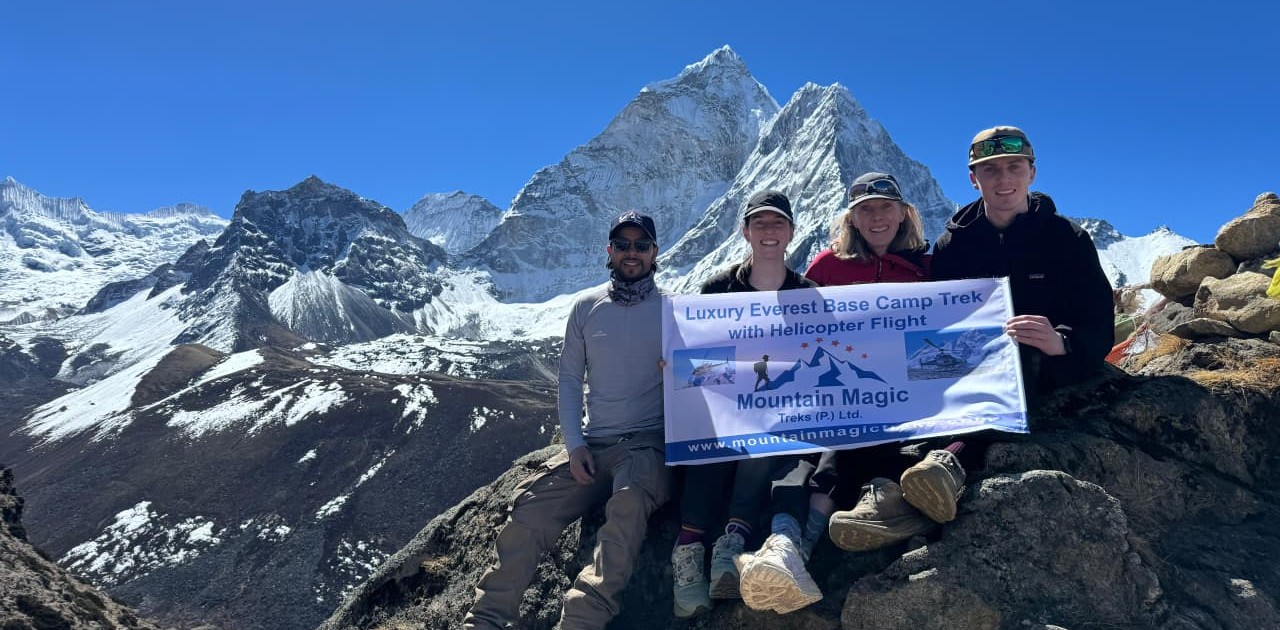
Some trips give you beautiful photographs. A journey to Everest gives you stories that are much harder to forget. The changing trails, mountain villages, cold mornings, and giant peaks create a travel experience that feels very different from an ordinary vacation.
The Everest Base Camp Trek with helicopter return combines the classic experience of walking through the Khumbu region with the convenience of flying back from the mountains. You still spend days on the trail and reach Everest Base Camp, but you can avoid the long return walk by taking a helicopter, depending on weather and safe operating conditions.
For travelers who want to experience Everest without adding unnecessary days to the journey, this can be an exciting option.
Start With the Landscape Below the Peaks
The route begins around Lukla, where green hills and mountain valleys surround the trail.
At first, the scenery may not look like the harsh Himalayan landscape you imagined.
Watch the Environment Change
As you gain elevation, the scenery slowly transforms.
Forests become thinner. Open valleys replace dense greenery. Rocky slopes become more common.
This natural change gives the trek its own rhythm.
You can see how different environments exist within one mountain region simply by walking upward.
Follow the Trail Through Everyday Life
The Everest route passes through villages where people live, work, and welcome trekkers.
You may see local porters carrying supplies, animals moving along the trail, and residents going about their daily routines.
Mountain Life Moves Differently
There are no large highways connecting every settlement.
Much of the region still depends on trails for transportation.
Walking through these communities gives you a better understanding of the effort required to live at high altitude.
The mountains are beautiful, but they are also home.
Namche Brings a Welcome Break
Namche Bazaar is one of the most active settlements along the route.
After several days of walking, the town can feel surprisingly lively.
Explore at Your Own Speed
Namche is also used for acclimatization.
You may take a short hike, visit local shops, enjoy a warm drink, or rest at your lodge.
There is no need to fill every hour with activity.
Giving your body time to adjust is more important than trying to see everything.
Find Beauty in the Details
Large mountain views are easy to notice.
Smaller details are easier to miss.
Look Along the Trail
Watch the prayer flags moving in the wind.
Notice the stone walls around villages.
Look at the wooden doors and windows of mountain homes.
Listen to the sound of rivers flowing through the valley.
These details make the journey feel personal.
Experience Tengboche’s Peaceful Setting
Tengboche is famous for its monastery and mountain views.
The village offers a peaceful atmosphere after the busier sections of the trail.
Take a Quiet Break
You can use this stop to enjoy the scenery without constantly thinking about the next destination.
The Everest Base Camp Trek with helicopter return is a physical journey, but it does not need to feel like a race.
Sometimes slowing down makes the experience better.
Dingboche Introduces Higher Terrain
The trail continues upward toward Dingboche.
Here, the mountains feel closer and the landscape becomes more open.
The air is thinner, and walking begins to require more effort.
Adjust Your Expectations
A short uphill section may take longer than expected.
That is normal.
Use smaller steps, keep a steady pace, and take breaks.
Your body needs time to adapt to the higher environment.
Prepare for the High-Altitude Section
After Dingboche, the trail moves toward Lobuche and then Gorakshep.
The landscape becomes rocky and exposed.
Keep Yourself Comfortable
Small things can make a big difference.
Keep your water easy to reach.
Use sunscreen even when it feels cold.
Wear sunglasses in strong sunlight.
Keep an extra warm layer available.
Do not wait until you are freezing before adding clothing.
Walk Into the Everest Region
The higher you go, the more dramatic the scenery becomes.
Large peaks rise around the trail, and the Khumbu Glacier becomes part of the landscape.
Let the Mountains Set the Pace
At high altitude, there is no prize for finishing first.
A steady pace is usually more useful.
Eat properly and stay hydrated.
If you feel unusual symptoms, tell your guide immediately.
Your safety matters more than completing a particular distance on schedule.
Gorakshep Brings You Close
Gorakshep is one of the final settlements on the route to Everest Base Camp.
The surroundings are cold, rocky, and powerful.
The Final Walk
From here, the trail continues toward Base Camp.
The terrain can be uneven, and the altitude makes the walk harder.
But the thought of reaching your goal provides plenty of motivation.
Each step takes you closer to one of the world’s most famous trekking destinations.
Experience Everest Base Camp
When you reach Everest Base Camp, you have completed a journey that began much lower in the mountains.
Take Time to Appreciate It
Do not immediately think about the next task.
Look around.
See the glacier and surrounding peaks.
Think about the villages and trails you crossed.
The meaning of Base Camp comes from the journey you made to reach it.
Make Room for Kala Patthar
Kala Patthar reaches about 5,545 meters and is famous for its views toward Everest.
The climb can be difficult because of the altitude.
The Morning Can Be Special
Many trekkers start early.
The mountains can look completely different as the first light reaches their slopes.
It is a cold and demanding start, but the wide Himalayan view can make the effort worthwhile.
Trade the Trail for the Sky
The return journey is where the Everest Base Camp Trek with helicopter return becomes different.
After completing the trekking section, you can return by helicopter instead of walking all the way back toward Lukla.
See Your Trek From Above
From a helicopter, the landscape looks completely different.
The trail becomes a tiny line.
Villages look small.
Rivers appear like narrow threads through enormous valleys.
You can see the scale of the Himalayas in a way that is impossible from the ground.
This final flight can feel like a reward after days of walking.
What Makes This Journey Different?
The Everest Base Camp Trek with helicopter return is not simply a faster version of a traditional trek.
It gives you two different ways to experience the same landscape.
First From the Ground, Then From Above
Walking lets you notice people, villages, trails, rivers, and small details.
Flying lets you understand the scale of the mountains.
The combination gives you a fuller picture of the Everest region.
Final Thoughts
The Everest Base Camp Trek with helicopter return offers a strong mix of adventure, culture, scenery, and convenience.
You begin in the greener lower valleys and gradually enter the high Himalayan landscape. Along the way, you experience Sherpa communities, Buddhist traditions, mountain villages, and dramatic views.
Reaching Everest Base Camp becomes the main achievement, while Kala Patthar offers another unforgettable viewpoint.
Then comes the helicopter.
After days of seeing the Himalayas one step at a time, you can watch the entire landscape spread beneath you from the air.
For travelers who want the challenge of trekking but do not want to spend several extra days walking back, this journey can be a practical and memorable choice.
Frequently Asked Questions
What is the main benefit of the Everest Base Camp Trek with helicopter return?
The main benefit is saving several days on the return journey while still experiencing the major trekking sections of the Everest route.
Do I need trekking experience?
Previous high-altitude trekking experience can help, but proper preparation and a suitable itinerary are important for beginners too.
Why is acclimatization necessary?
Your body needs time to adjust as you move into thinner air. Planned acclimatization helps make the higher sections more manageable.
What makes Kala Patthar popular?
Its high location provides broad views of Mount Everest and the surrounding Himalayan peaks.
Can helicopter flights change because of weather?
Yes. Mountain weather can affect visibility, wind conditions, and flight operations.
Should I keep extra time after the helicopter journey?
Yes. A flexible schedule is recommended because mountain flights may not always operate exactly as planned.
