
Finding the best hair transplant surgeon in Delhi, India, is an important step for anyone considering hair restoration. With several clinics offering FUE procedures, advanced techniques, and attractive treatment packages, patients may find it difficult to determine which surgeon is genuinely suitable for their needs.
However, identifying the right hair transplant surgeon involves more than looking at online rankings or promotional claims. A surgeon’s medical qualifications, specialised training, practical experience, surgical planning, and approach to donor management all deserve careful consideration.
There is no universally accepted independent ranking that establishes one doctor as the best for every patient. The right choice depends on the individual’s hair loss pattern, expectations, medical suitability, and the surgeon’s ability to plan treatment responsibly.
1. Medical Qualifications and Specialised Training
The first factor to evaluate is the surgeon’s medical background.
Hair transplantation requires a detailed understanding of hair growth cycles, scalp anatomy, follicular unit structure, wound healing, and the causes of hair loss.
Patients should verify the doctor’s medical degree, postgraduate specialisation, relevant surgical training, and professional credentials.
A surgeon with a dermatology background may also bring valuable knowledge of scalp disorders and medical hair loss management, which can help when deciding whether surgery is appropriate or whether non-surgical treatment should be considered.
2. Practical Experience in Hair Restoration
The number of years a doctor has practised medicine and the amount of experience specifically in hair transplantation are not necessarily the same.
Patients should ask about the surgeon’s experience with different hair restoration procedures, including:
-
FUE hair transplantation
-
Hairline reconstruction
-
Crown restoration
-
Unshaven hair transplant procedures
-
Beard hair transplantation in selected cases
-
Corrective hair transplant surgery
The ability to assess complex cases is particularly important. A patient with extensive baldness or a poorly performed previous transplant may require a different approach from someone with early-stage hairline recession.
3. Natural Hairline Design and Surgical Planning
A natural-looking hair transplant depends heavily on the surgeon’s planning.
The frontal hairline should be designed according to facial proportions, age, existing hair characteristics, and the possibility of future hair loss.
A hairline that is too low, too straight, or too dense may appear unnatural over time. The surgeon should also consider hair direction, growth angles, and the appropriate distribution of single- and multiple-hair grafts.
A good treatment plan aims to restore an appropriate appearance rather than simply maximise the number of grafts implanted.
4. Donor Area Management
The donor area is one of the most valuable resources in hair transplantation. It is usually located at the back and sides of the scalp and provides the follicular units used for restoration.
Because donor hair is limited, extraction must be planned carefully.
An experienced surgeon evaluates donor density, hair calibre, follicular unit distribution, and the patient’s likely future hair loss. Excessive harvesting may lead to visible thinning and reduce the options available for future treatment.
Patients should ask how donor extraction will be distributed and how the remaining donor area will be protected.
5. Understanding FUE and Other Surgical Approaches
Follicular Unit Extraction, commonly called FUE, is a widely used hair transplant method. Individual follicular units are extracted from the donor area and implanted into the recipient region.
Some clinics also provide specialised approaches based on their instruments and graft-handling methods.
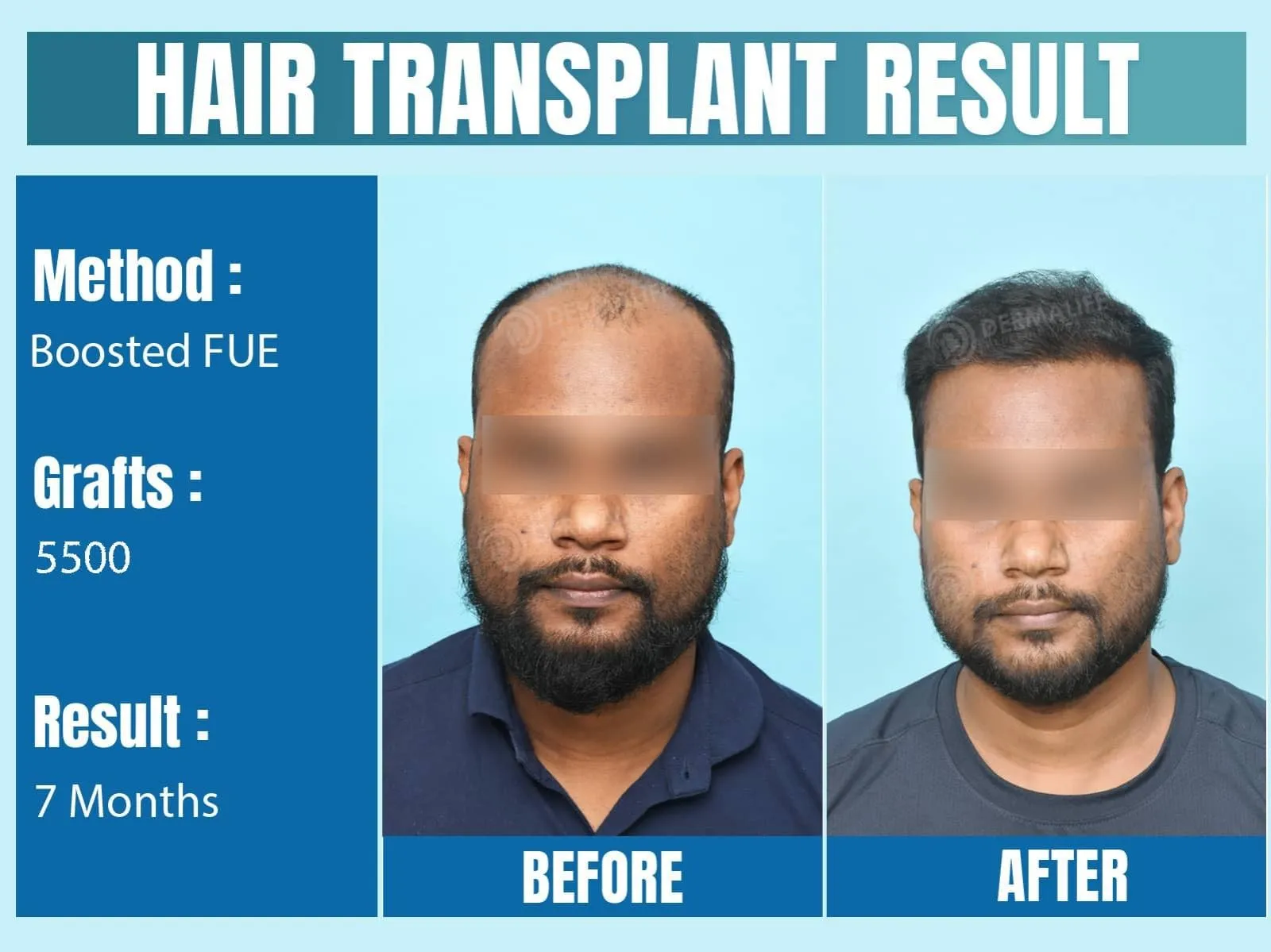
For example, Dermalife Skin & Hair Clinic offers Boosted FUE, a clinic-specific approach using specialised extraction instruments and a technique described by the clinic as the “No Root Touch Method”.
Patients should understand what the method involves, how grafts are handled, and whether it is appropriate for their scalp characteristics. The name of a technique should not replace an explanation of its actual surgical steps.
6. Review Genuine Patient Results
Before-and-after photographs can provide useful insights into a surgeon’s work.
However, patients should review results carefully rather than relying on selected promotional images.
Look for:
-
Consistent lighting and camera angles
-
Photographs taken before and after treatment
-
The graft count used in the procedure
-
The time elapsed after surgery
-
Results from patients with similar hair loss patterns
-
Donor area appearance after healing
A hair transplant result should be evaluated over time. Early photographs do not represent final hair growth, and individual outcomes can vary.
7. Experience With Hair Transplant Repair
Not all hair transplant cases are straightforward. Some patients seek corrective treatment after experiencing an unnatural hairline, poor graft placement, visible scarring, or excessive donor extraction.
Repair hair transplant procedures can be more challenging than primary hair transplantation because the surgeon may have to work with scar tissue, altered tissue characteristics, and limited donor availability.
A surgeon’s understanding of corrective hair restoration can therefore be an important consideration when evaluating experience.
However, not every unsuccessful result can be fully corrected. A responsible surgeon should explain the limitations of repair surgery during consultation.
8. Patient Consultation and Transparency
A professional consultation should involve a detailed evaluation of the patient’s scalp and donor area.
The doctor should explain the likely graft requirement, treatment options, possible risks, recovery process, and realistic expectations.
Patients should be cautious if they receive a fixed graft estimate without an examination or are pressured to book immediately through limited-time offers.
Transparent communication is an important part of responsible medical care.
9. Surgical Facilities and Follow-Up Care
Hair transplantation involves more than the surgeon’s technical skills. The clinical environment, trained staff, sterilisation protocols, graft handling, and post-operative support also matter.
Patients should understand where the procedure will be performed, who will be involved, and how follow-up care will be managed.
Hair growth takes several months, so post-operative guidance and scheduled reviews are important parts of the treatment journey.
Dr. Gaurav Garg and Dermalife Skin & Hair Clinic, Delhi
Among the doctors patients may research when considering hair restoration in Delhi is Dr. Gaurav Garg, Founder and Director of Dermalife Skin & Hair Clinic in Green Park Extension, South Delhi.
Dr. Garg completed his postgraduate training in Dermatology from Seth GS Medical College and KEM Hospital, Mumbai. His additional training includes an international fellowship in hair transplant surgery in Israel and advanced dermatology, dermatosurgery, and laser training in Singapore.
Dermalife offers FUE and its specialised Boosted FUE approach, along with unshaven hair transplantation, beard hair transplantation in selected patients, and corrective hair restoration.
The clinic also provides free hair transplant consultations, giving patients an opportunity to discuss their hair loss pattern, donor capacity, and possible treatment options before deciding on surgery.
Final Thoughts
The best hair transplant surgeon in Delhi is not necessarily the doctor with the most advertisements, the lowest prices, or the highest promised graft count.
Patients should evaluate medical qualifications, specialised training, surgical experience, natural hairline planning, donor management, genuine patient results, and transparent communication.
A carefully selected surgeon should be able to explain not only what can be achieved but also the limitations of the procedure. This balanced approach helps patients make informed decisions and plan hair restoration with realistic long-term expectations.
